
Get found and Get Clients | How The Butterfly Vet Website got off to a GREAT start!
What you'll find in this post: On-page SEO is the set of optimizations you make directly on your website: title tags, headers, URLs, images, and content structure, which help search engines understand your pages and show them to the right people.
This post covers the 8 key on-page SEO factors, a real case study (a brand-new site ranking on page one of Google within 90 days), a full checklist, and answers to the most common questions.
Reading time: approximately 8 minutes.
Now buckle up. This post is not for the faint of heart. It’s a long, detailed one for the long, detailed person who wants to dig deep. If you are a skimmer, you’ll still get a lot out of this post - especially if you are a DIYer!
Dr. Tara da Costa had something rare.
A mobile veterinary practice built around one of the most tender moments a pet owner ever faces. The end of a beloved animal's life. Hospice care. Home euthanasia. Grief support. Ceremony. All heart.
What she didn't have was a website.
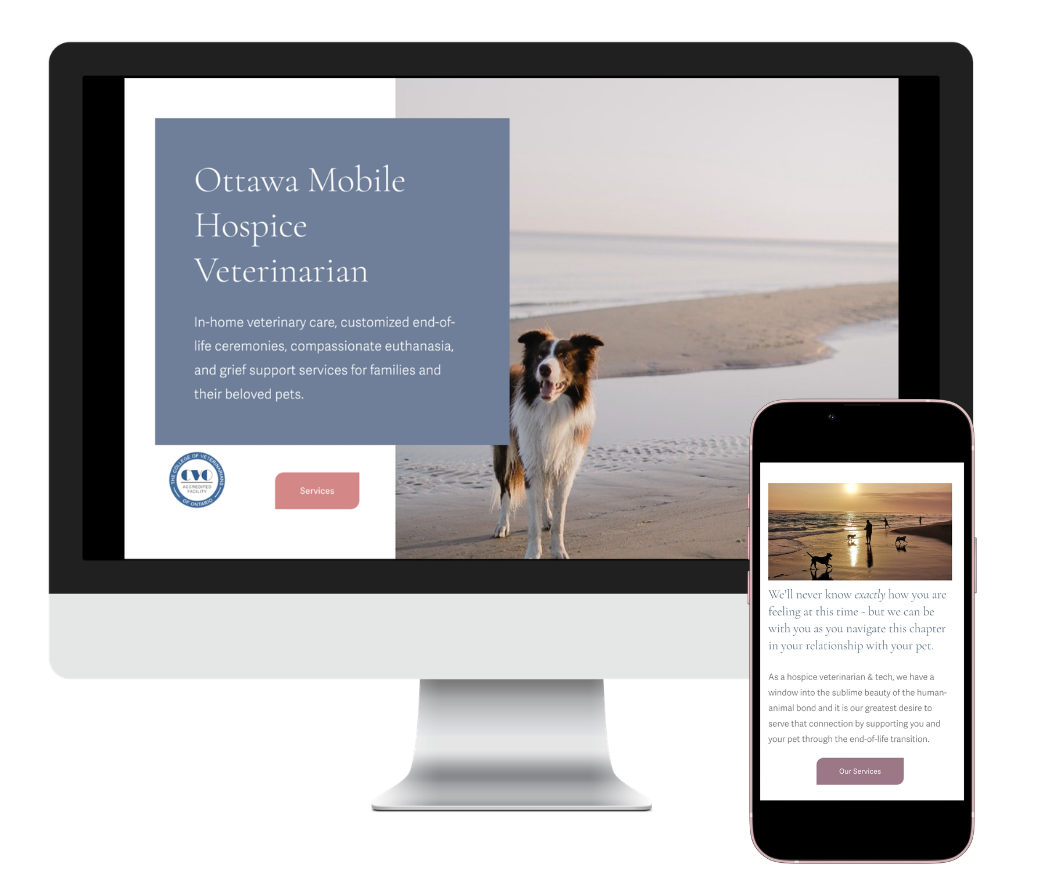
I used to design full websites, and within 60 to 90 days of launching, The Butterfly Vet was showing up on the first page of Google for her key search terms in Ottawa.
Not because of a big ad budget. Not because she'd been building domain authority for years.
Because we got the on-page SEO fundamentals right from the start.
On-page SEO is the part of search engine optimization that lives entirely on your website. The words, the structure, the details. And it's one of the most powerful things you can do for your visibility, because it's completely within your control.
If you’ve spent anytime on my social media, I give it away there all the time. But it’s time to put it all into one post.
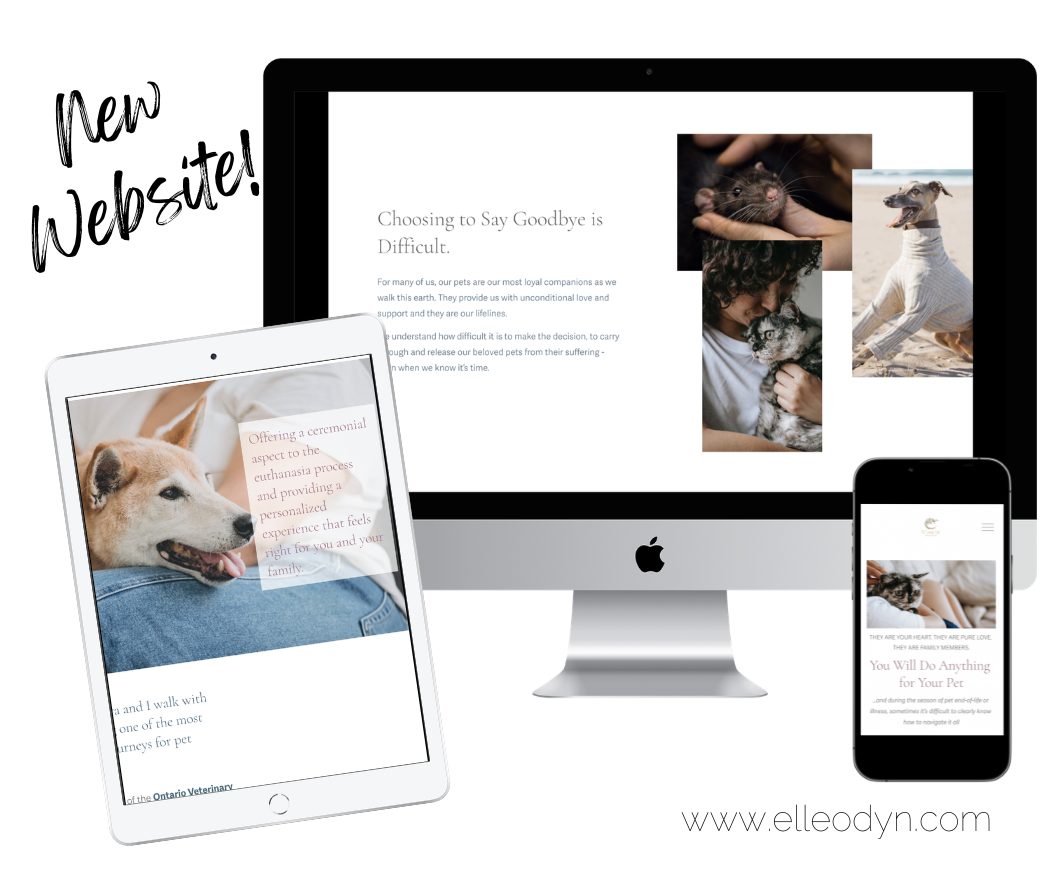
This is the actual lauch images I shared online in 2023 when Tara’s business launched.
What On-Page SEO Is (and Why It Matters for You)
On-page SEO is everything you do on your own pages to help search engines and real humans understand what you offer and who it's for.
Unlike building backlinks or growing your domain authority over time, on-page SEO is something you can act on today. It doesn't require tech skills or a developer. It requires clarity and intention.
You can do this!
On-page SEO: a working definition. On-page SEO refers to all optimizations made directly on a web page to improve its visibility in search engines. This includes title tags, meta descriptions, header structure, keyword placement, URL format, image alt text, internal links, and overall content quality. Unlike off-page SEO (such as backlink building), on-page SEO is fully within a website owner's control.
Are you excited yet? Inspired? I know…just wait!
This image is here for those that think this stuff is boring - it is sometimes. But look at the sky! Now let’s get back to SEO On page optimization!
1. Title Tags
Your title tag is the clickable headline that shows up in search results. It's the first thing Google reads about your page and the first thing a potential client sees before deciding to click.
For The Butterfly Vet, we didn't use something generic like "Home | The Butterfly Vet." We used titles that clearly named the service and location. Things like "Ottawa Mobile Veterinarian | In-Home Hospice & Euthanasia Services." Specific. Honest. Easy for the right person to recognize.
According to research cited by Moz, title tags between 50 and 60 characters have the best chance of displaying fully in Google search results without being truncated. (Source: Moz, Title Tag Guide)
A few things to keep in mind:
Keep it under 60 characters so it shows up fully in search results.
Include your primary keyword, ideally near the beginning.
Write it for a real person. It still needs to feel like an invitation.
Every page should have its own unique title tag.

See the purple? That’s the Title Tag.
Did you know you could get all this done (most of it) in one day with me during a VIP Day? Join me and let’s get your business in front of your people!
2. Meta Descriptions
The meta description is the short paragraph beneath your title in search results. It doesn't directly affect your ranking, but it influences whether someone clicks through.
Think of it as a quiet hello. A few sentences that let the right person know they've found what they were looking for.
A study by Backlinko found that pages with a meta description get approximately 5.8% more clicks than those without one. Small effort. Meaningful return. (Source: Backlinko, Google CTR Study)
A few things to keep in mind:
Keep it between 150 and 160 characters.
Include your keyword where it fits naturally.
Lead with what matters to the person searching. What will they find here?
Make it feel like it belongs to this specific page, not like it was copied across your whole site.

The black letters? That is your Meta description. Sometimes the search engine will write something different. BUT - if YOU fill this in on your website, it’s more likely to use YOUR words. So do it, k?
3. Header Tags
Headers are the titles and subtitles that organize your content. The H1, H2s, and H3s you see when reading a well-structured page.
They serve two things at once: the visitor who's scanning your page to see if it's worth reading, and the search engine crawling your site to understand what it's actually about.
When I built The Butterfly Vet website, every service page had one clear H1 that matched what someone would actually search for. The supporting sections used H2s to walk the reader through the experience. Gently, clearly, in a way that matched Dr. Tara's voice.
Your headers should tell the story of your page before anyone reads the first full sentence.
A few things to keep in mind:
Use exactly one H1 per page. It's your page's main statement.
Use H2s for your major sections and H3s for anything nested within them.
Weave your keywords into headers where they fit naturally.
Read just the headers alone. Do they tell a coherent story?
Are you having fun still? Are you still with me? Because if you do all these things, your website will rank higher in search results!
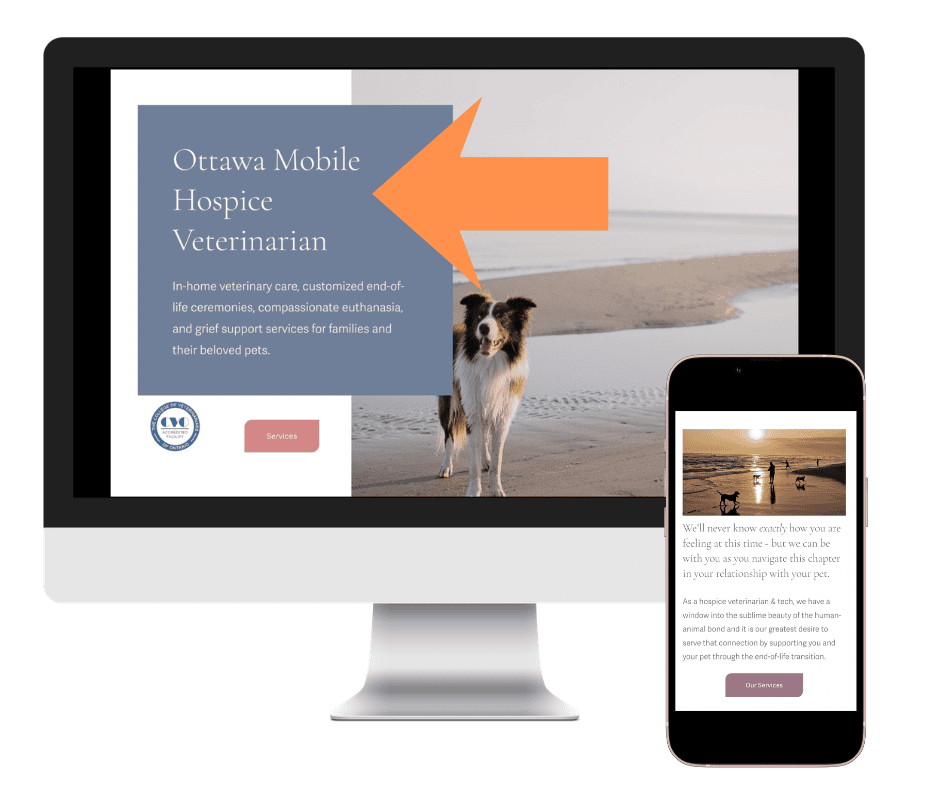
Notice that orange arrow. That is pointing to the H1 title tag. Fun eh?
4. Keyword Placement
Keywords are still one of the primary ways Google understands what your page is about. But the way we use them has evolved.
And I KNOW the word KEYWORD makes many of you itchy - I’m sorry.
It's not about repeating a phrase over and over - that’s annoying for everyone.
It's about using language that clearly and naturally names your topic.
For a mobile vet serving Ottawa, those terms included things like "at-home pet euthanasia Ottawa" and "in-home hospice vet." We used them in ways that felt true to Dr. Tara's warmth.
A few things to keep in mind:
Include your primary keyword in the first 100 words of your page.
Use related terms and synonyms naturally throughout. Google understands context.
Read it aloud. If it sounds off, it will feel off to the algorithm too.
Google's People Also Ask section is a genuinely useful free tool for finding related language. (and for real, this is fun!! so many ideas!!)
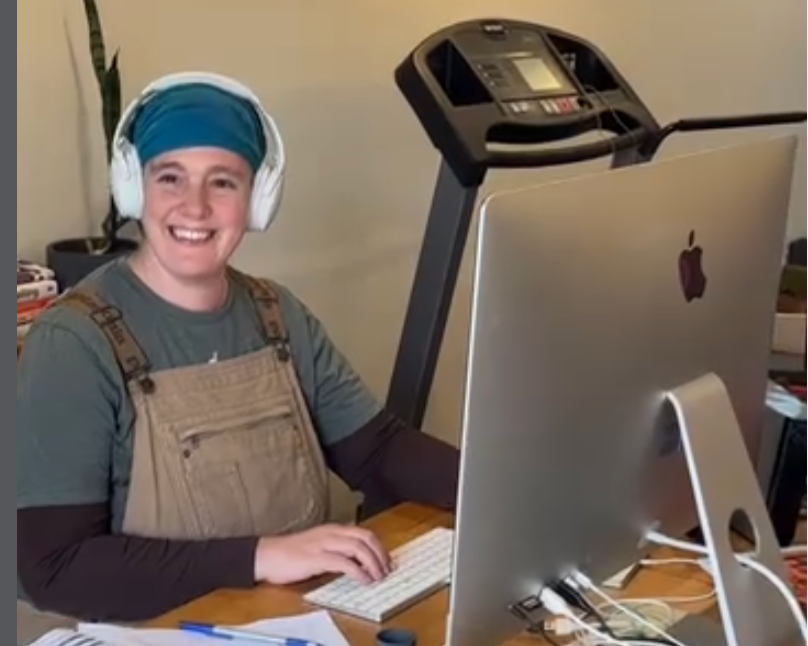
This could be you. Smiling happily as you optimize your website pages and people start finding you!
5. URL Structure
A clean, clear URL tells both Google and the person hovering over a link exactly what they're about to find. So few people do this - CHOOSE your URLs, don’t leave them as the defaults-k?
It builds trust before they've even arrived.
A few things to keep in mind:
Keep URLs short and descriptive: /ottawa-mobile-vet-services, not /page?id=2847
Include your target keyword when it fits naturally.
Use hyphens between words, not underscores.
Avoid dates in URLs for evergreen content. It makes updating feel more complicated than it needs to be.
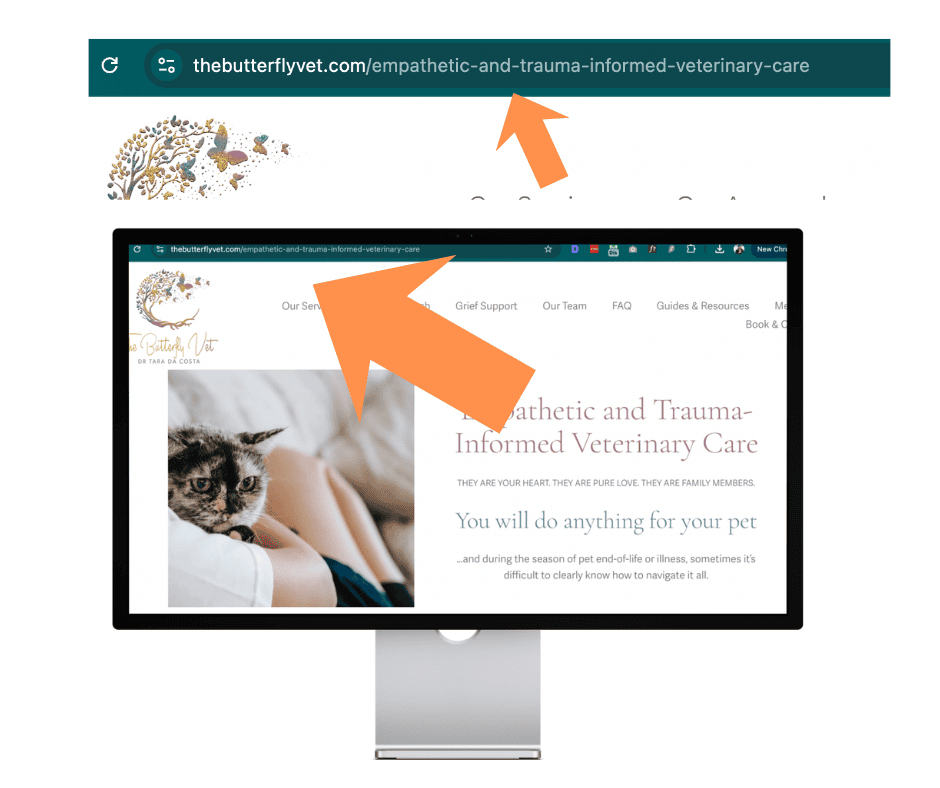
URLs. Follow the orange arrows. Fun again right? This is another signal about what this page is about and it is totally worth fixing (especially before you launch your new website or a new page) Be careful if you are changing old urls, you might get a pile of broken links. More on that another time.
6. Image Optimization
Images are often the biggest reason a website loads slowly. Page speed is a ranking factor. But they're also an opportunity that most people quietly skip past.
Oh, have you heard me talk about this online 1000 times? Yes. Yes, you have. I still really mean it, and optimizing your images still really matters! (I’m sorry I’m yelling)
Every image on The Butterfly Vet site was compressed before upload, given a descriptive file name, and paired with alt text that described what was actually in the image. Small decisions. Real impact.
Google has confirmed that page speed is a ranking factor for both desktop and mobile search. According to Google's own research, as page load time increases from one to three seconds, the probability of a visitor leaving increases by 32%. (Source: Google/SOASTA Research)
A few things to keep in mind:
Compress images before uploading. TinyPNG is free and takes seconds.
Name your files descriptively: ottawa-mobile-vet-home-visit.jpg, not IMG_4923.jpg
Write alt text that describes the image. Include a keyword where it genuinely fits.
WebP loads faster than JPEG or PNG when your platform supports it.
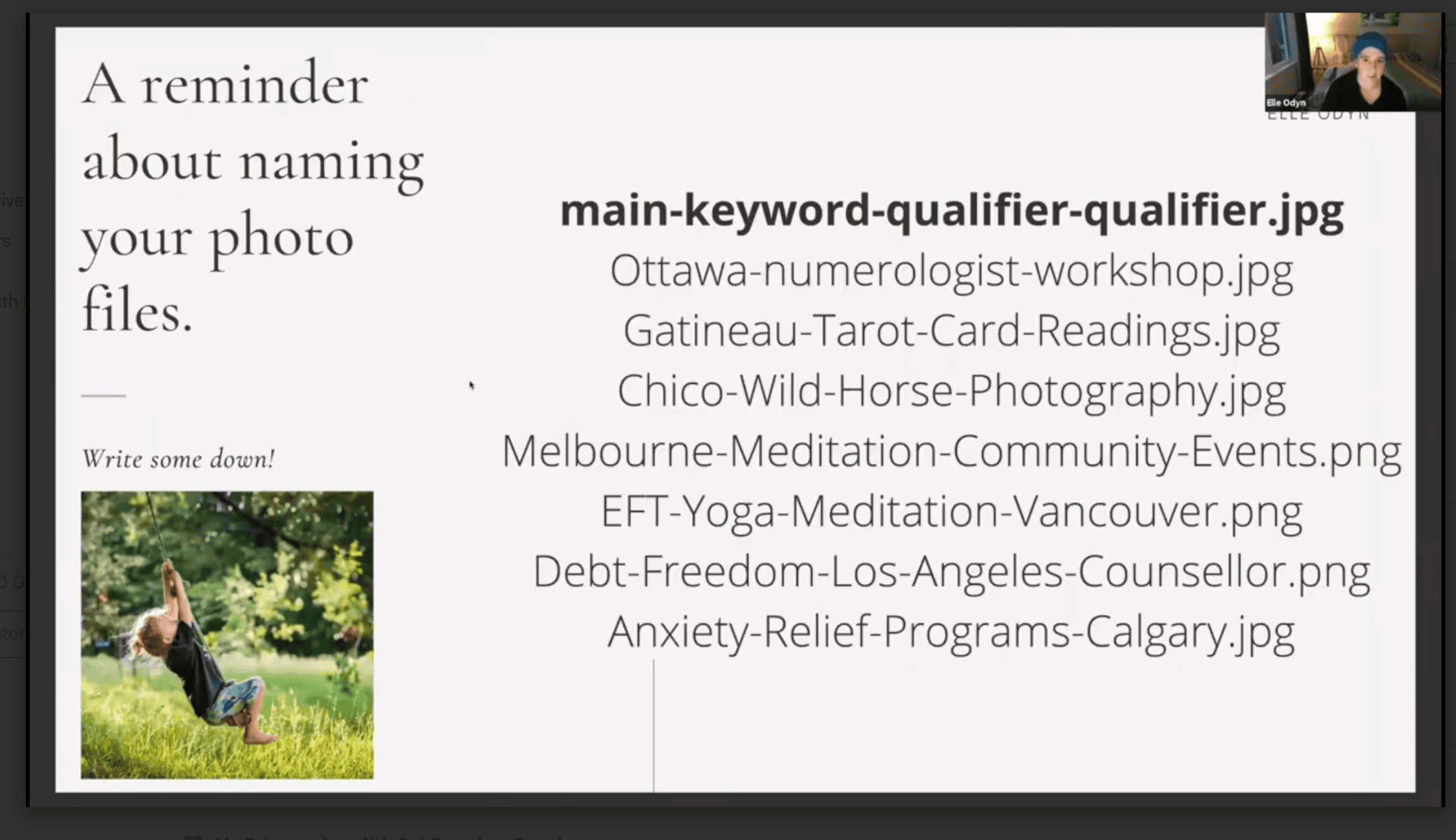
I’ve been teaching workshops about this since 2014…same same. Do this. It works. Rename your photo files. This is a screen shot from an online workshop back in 2022.
7. Internal Linking
Internal links connect your pages to each other. They help Google understand your site's structure, transfer authority between pages, and guide visitors naturally from one piece of helpful content to the next.
A well-linked site feels like a thoughtful host. It anticipates what you might need next.
A few things to keep in mind:
Link from blog posts and service pages to related content on your site.
Use descriptive anchor text. Link the phrase "in-home pet hospice care," not just "click here."
Your most important pages should be reachable within two or three clicks from your homepage.
A few well-placed links are worth more than a paragraph full of them.
If you haven't set up your Google Business Profile yet, that's a great next step for local visibility.

This is Lemon. She’s surprised you are still reading this post and wanted to acknowledge how amazing it is that you are holding on and still reading. If you do all of these on-page SEO actions on your site over the next month, you will rank higher is local search. Quack.
8. Content Quality and Search Intent
Ok. This is so important and honestly one of my favourite things!
Google has gotten remarkably good at recognizing content that genuinely helps people. Not just content that's optimized to rank. Content that actually serves the person who arrived looking for something is what matters.
The beautiful thing is you don't have to choose between the two.
The Butterfly Vet ranks because Dr. Tara's content is real. It speaks directly to someone in one of the most tender moments of their life. The on-page optimization made sure Google could find it. The quality of the content made sure Google wanted to surface it.
And for real, WAY TO GO TARA and TEAM for the blog posts!! That is excellent!
A few things to keep in mind:
Match your content to what someone actually needs when they search that keyword.
Answer the full question. Don't pad, but don't leave obvious follow-up questions unanswered.
Short paragraphs and clear structure aren't just nice to read. They're a signal.
Revisit old content periodically. Google rewards pages that stay current.
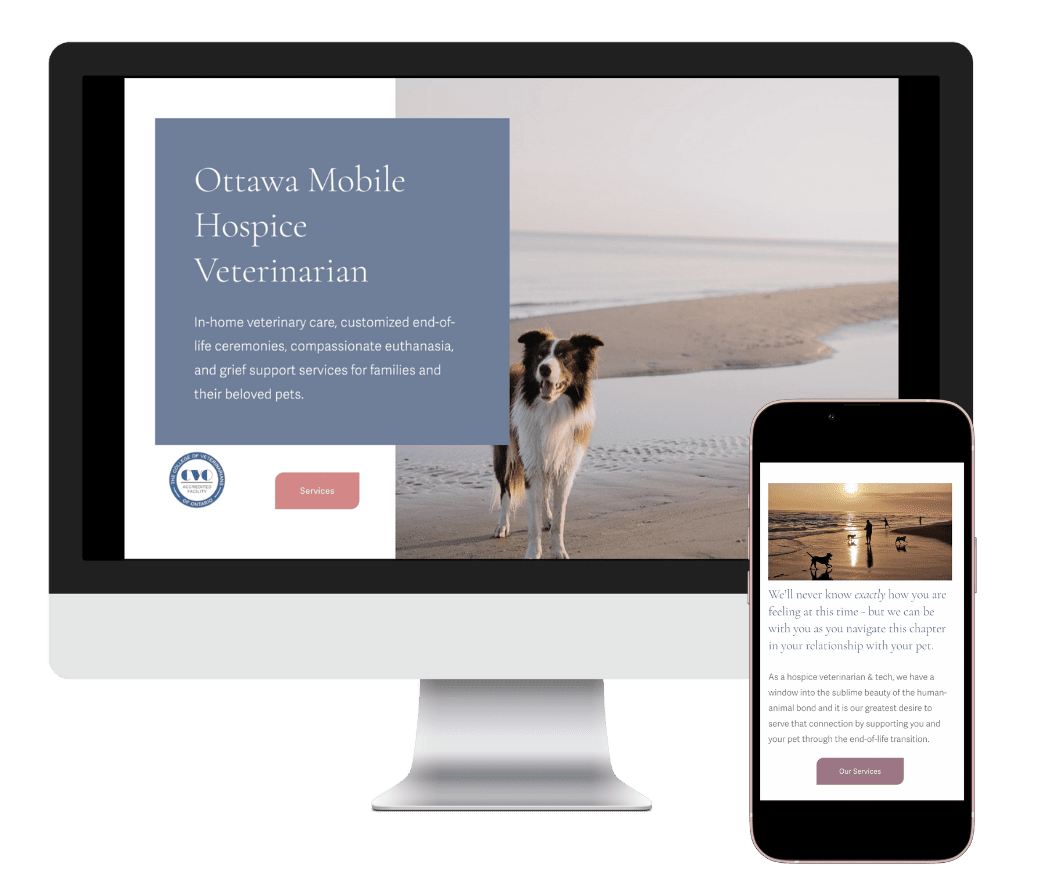
What This Looked Like for The Butterfly Vet
Dr. Tara came to me with something extraordinary, and there was no way for the right people to find it.
We built the site from a blank page. Every title tag was written to reflect both the search term and the practice's warmth. Service pages were structured so that a grieving pet owner could find what they needed without having to work for it. Images were compressed and named. URLs were clean. The copy spoke to the person, not just the algorithm.
Within 60 to 90 days of launch, The Butterfly Vet appeared on page one of Google for her core keywords in the Ottawa area.
And honestly, I believe it was on page one within 30 days, but I can’t prove it, and my desire for accuracy is strong, so I’m being conservative with 60 days.
Tara didn't have years of domain authority. She didn't run ads. She had a brand-new site with clear on-page fundamentals and that was enough.
On-page SEO levels the playing field. When you get the basics right, you don't have to be the biggest, the oldest, or the loudest. You just have to be clear.

You could fix your SEO in person, guided by Elle Odyn here at her Outdoor Forest Garden Office. For real, this is where we can work. If it’s snowing, or storming, there’s an indoor option too still overlooking this scene. Imagine that!
And if you want to understand why a small number of focused, well-optimized posts will outperform a high volume of scattered ones, that's what topical authority is about.
Frequently Asked Questions About On-Page SEO
What is on-page SEO? On-page SEO is the practice of optimizing individual web pages so that search engines can understand, index, and rank them accurately. It includes elements like title tags, meta descriptions, header structure, keyword placement, URL format, image alt text, internal linking, and content quality. It is distinct from off-page SEO, which focuses on external factors like backlinks.
What is the most important on-page SEO factor? Content quality and search intent alignment are widely considered the most foundational on-page SEO factors, because they determine whether a page genuinely serves the person searching. Title tags and header structure are the most technically impactful elements for signaling relevance to search engines.
How long does on-page SEO take to show results? On-page SEO changes can begin to show results within a few weeks for newer pages, and within 30 to 90 days for established pages, depending on how competitive the keywords are and how frequently Google crawls your site. The Butterfly Vet, a brand-new site built with on-page SEO fundamentals from launch, ranked on page one within 60 to 90 days.
Does on-page SEO still matter with AI search? Yes, and arguably more than ever. AI-powered search engines like Google's AI Overviews, Perplexity, and ChatGPT prioritize content that is clearly structured, easy to extract, and genuinely helpful. On-page SEO practices, especially clear headers, concise definitions, and well-organized content, are exactly what makes a page readable by both humans and AI systems.
What is the difference between on-page SEO and technical SEO? On-page SEO refers to the content and structure of individual pages. What you write and how you organize it. Technical SEO refers to the underlying infrastructure of a website, things like site speed, crawlability, mobile responsiveness, and structured data. Both matter, but on-page SEO is typically where small business owners can make the most immediate impact.
How do I know if my on-page SEO is working? You can track on-page SEO performance using Google Search Console (free), which shows which keywords your pages are appearing for, how often they're clicked, and where they rank. Tools like Ubersuggest or Semrush can provide additional keyword tracking. Signs it's working: increasing impressions, improving keyword rankings, and more organic traffic over time.
One Last Thing
On-page SEO isn't about gaming a system.
We don’t cheat around here. We are just and fair! We grow businesses with integrity and lattes.
It's about making sure that when the right person is searching for what you do, your work is actually findable. That the words on your page reflect what you genuinely offer. The structure makes it easy for someone to say, yes, this is it.
Dr. Tara built something meaningful. On-page optimization made sure the families who needed her could find her.
Your work matters. And the right people are already searching for it.
~ Elle | elleodyn.com
Note: The Butterfly Vet (thebutterflyvet.com) is a real client. The site was designed and built by Elle Odyn in Spring 2023. The results described reflect actual outcomes within the first 60 to 90 days of the site's launch. Congratulations to Tara and her team for having so much success supporting our community!
If you're ready to take the next step with your own SEO, the visibility quiz is a good place to start. It takes about five minutes and points you toward what makes sense for where you are right now. I will reach out and offer you a next step based on your results - and it’s fun!