Your Neurodivergent Mind Is Qualified to Run a Business
What you'll find in this post: The research is clear. Neurodivergent and highly sensitive people are not just capable entrepreneurs; they are also highly creative. They are overrepresented among founders, CEOs, and business owners, and are starting to get the attention they deserve. This post looks at what the data says, what it actually means, and why the traits you may have been told were problems might be exactly what makes your business work. Reading time: approximately 7 minutes.
Alright, I do repeat the same things over and over again, it’s true:
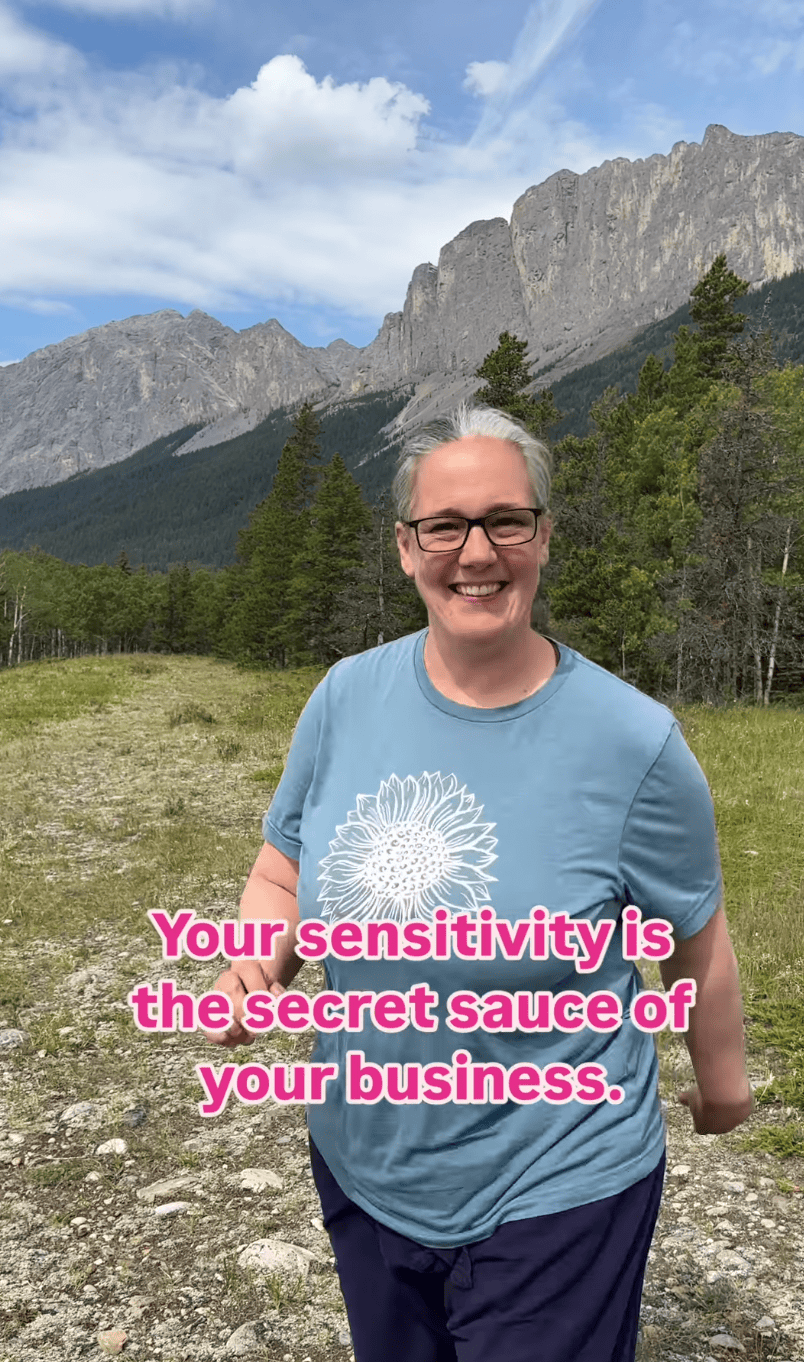
Your sensitive soul is your secret sauce.
You are perfectly designed to create the business you are dreaming of.
Your dream belongs here.
All lovely, right? But la la la, I can say all kinds of crap - but is it backed by evidence? Show me the research! Show me the science (current).
My need for accuracy is intense - and comfortable. So, if you want the science, let’s dive in.
Neurodivergence and business. Here we go.

What the Research Actually Says
One study found that 72% of surveyed business owners reported a diagnosis of a mental health condition or neurodivergence. Psychology Today: now…that’s interesting.
A 2024 survey of over 500 neurodivergent founders found that 67% believe their neurodiversity makes them better businesspeople. Just 7% said it makes them worse. Sifted
A study of self-made millionaires in the UK found that 40% were dyslexic. Former Cisco CEO John Chambers, diagnosed with dyslexia at age 9, estimates that 25% of CEOs are dyslexic. DIY Genius
Research from ZenBusiness found that 92% of Gen Z recognize the value of neurodiversity in entrepreneurship, and more than half of Gen Z identify as neurodiverse. Essence
Did I use AI to gather this research? Yes, I did. I asked for documented, peer-reviewed, survey-based evidence. It seems that, based on this, neurodivergent people gravitate toward entrepreneurship, succeed in it, and often credit their neurodivergence as part of the reason.
Why Entrepreneurship Fits the Neurodivergent Mind
Neurodivergent people have natural strengths that lend themselves to entrepreneurship. And there is also the reality that many struggle in traditional work settings, from exclusionary hiring practices to sensory overload in open-plan offices to long commutes to rigid promotion plans that keep people from progressing into positions of leadership. Tenentrepreneurs
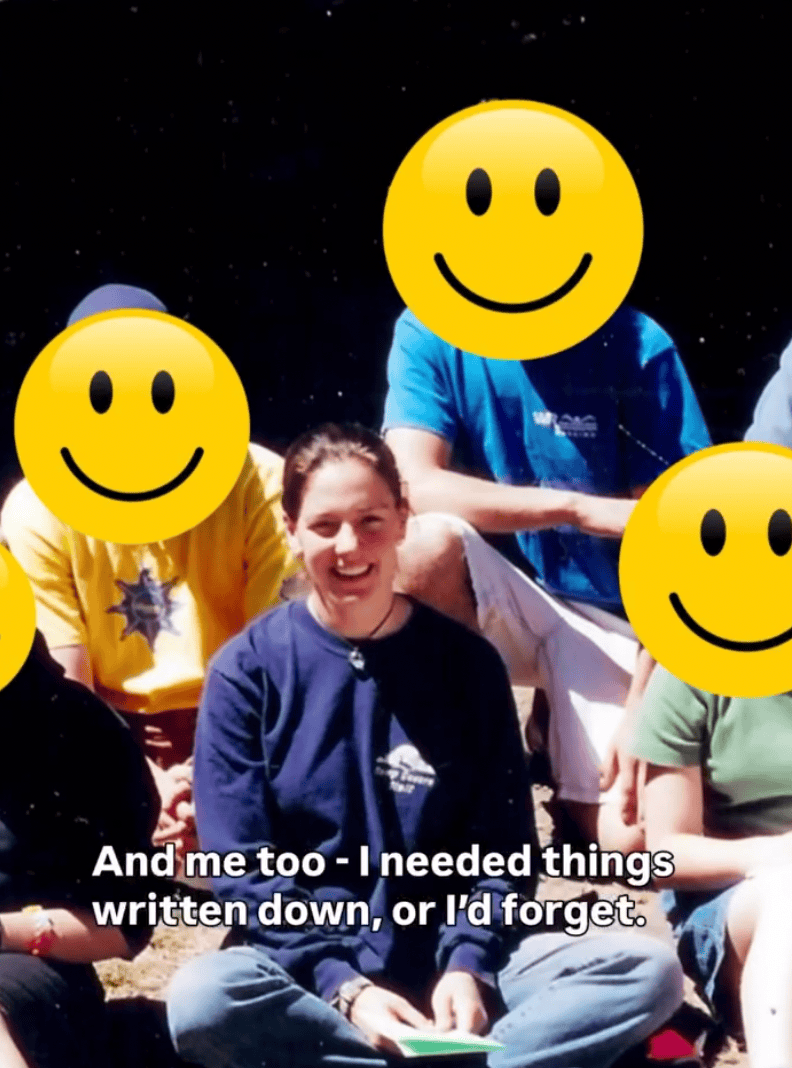
Young Elle at camp. Because I needed things written down to remember, it meant I had mega-systems and organization in place for the campers and staff I worked with too. Which met their needs too - little did I know HOW much I needed that until I left the structure of camp!
Side note (from me, Elle): don’t even get me started about open-plan offices - how to destroy Elle’s mind? That’s how you do it. Ask me to work where I can hear other people breathing? No. No.
Both things are true at once.
The traditional workplace was not designed for everyone. The rigid hours. The open plan offices. The performance reviews that measure the wrong things. The hiring processes that screen for neurotypical presentation. (Oh, look! another can of worms!)
So many of us arrived at entrepreneurship because of who we are, right? Because we needed an environment we could actually work in. Because we needed to design something around our minds rather than forcing our minds into someone else's design.
And then something interesting happened. The very traits that made traditional employment hard turned out to be extraordinary assets in business.
Hyperfocus. Pattern recognition. Creative problem solving. Deep empathy. The ability to think differently from everyone else in the room. The refusal to accept that something must be done a certain way just because it has always been.
Have these gifts led to challenges in the workplace for me? Yeah, sometimes. But there were ALSO the gifts that kept on giving, which is why I was hired. Need a creative, yet organized program director - oh, that was me!
Research published in a peer-reviewed entrepreneurship journal found that entrepreneurs with ADHD employ a more intuitive cognitive style and demonstrate higher levels of entrepreneurial alertness. Sage Journals. In other words, the brain that struggles to sit still in a meeting is often the brain that spots the opportunity everyone else missed.
Raise your hand if you have had similar experiences!
The Highly Sensitive Situation
Neurodivergence and high sensitivity often go hand in hand.
Highly sensitive people process the world deeply. They notice what others miss. They feel the emotional temperature of a room, a conversation, a client relationship. Quite often, their sense of justice means - you’re gonna be working with someone who really cares about what’s “right”.
In business, that depth of perception translates into the ability to understand what a client is experiencing (and if not, to ask more questions!). The ability to create work, products, and services that feel like they were made for your clients. The ability to build, because people feel seen by you.
That’s some good stuff!
Around 95% of the people I work with share this thread. Multipassionate. Deep feeling. Beautifully sensitive. Wanting to build something that is aligned with who they are. Not fitting neatly into social media business models. (and yes, many of you get itchy when it comes to SEO - it’s cool - I got you)
And THEY are my dream clients!
Their sensitivity is a huge part of their work. It is what makes their perspective so important to their clients. It is what draws their clients in. I know about hiding the sensitivity - I get it - but the more I’ve been fully myself in my business, the more I’ve found balance, health, and gotten to work with even more amazing clients.
The Part Nobody Talks About
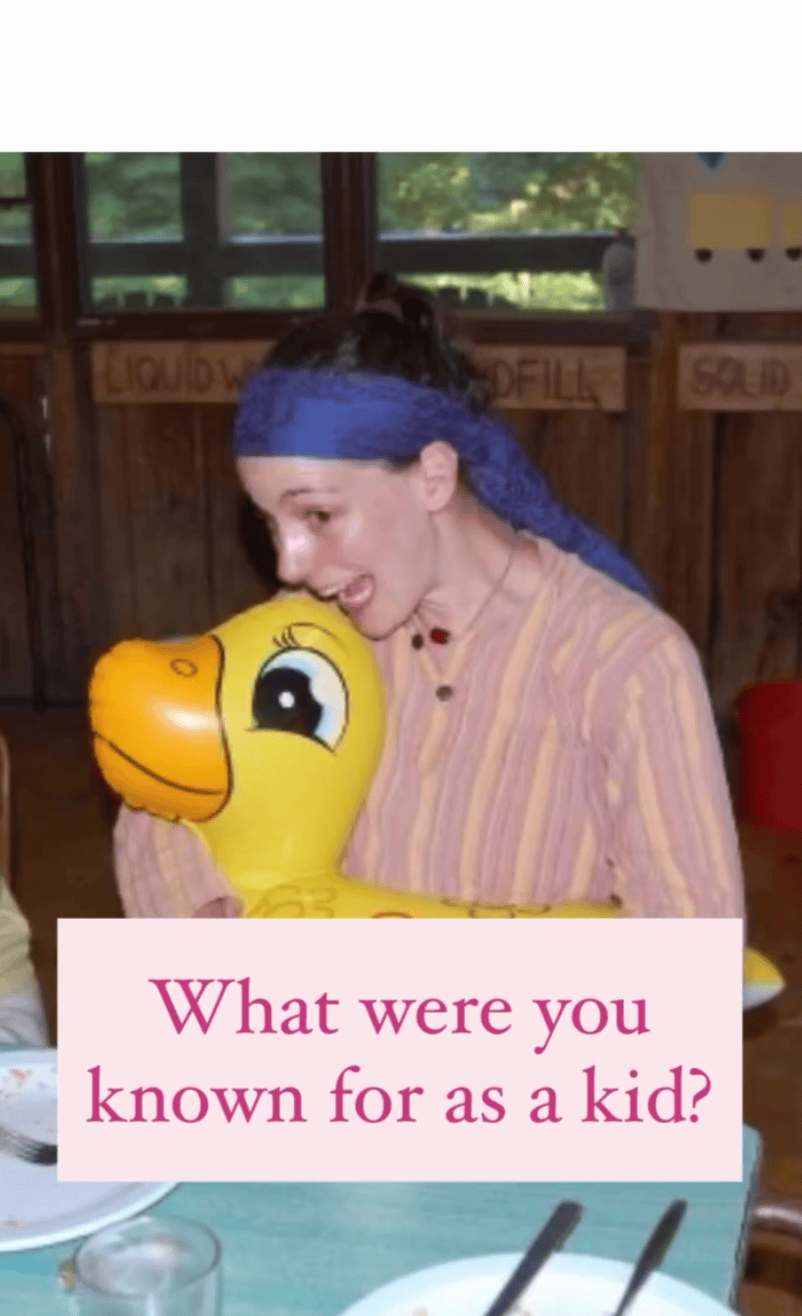
My energy is the same as back then, and camp gave me a space to be me, including detail-oriented + big-picture thinking, super sensitivity to relationships, solid leadership skills, and a brain ready for anything.
In a survey of over 500 neurodivergent founders, almost two-thirds said they felt starting their own business was the only way they could make a living. And 96% reported experiencing discrimination because of their neurodiversity. Sifted
Whoa - did you read that?
Behind the inspiring statistics about creativity and pattern recognition, many people entered entrepreneurship because they struggled or did not get the support they needed at work. They did not quite fit (now, this is a whole-systems conversation we can get into another time because… oh my!).
Side note - I worked in camping and outdoor education, so I was lucky to find a place where my true self was celebrated and appreciated. My super systems-oriented brain, high energy, silliness, combined with hyperfocus and creativity, fit there. Camp is awesome. I know not everyone has had a work environment like that.
Building your own business is possible - most of you here reading are already doing it. Many of the amazing clients I get to work with have left their jobs due to burnout, exhaustion, or a desire to find something different. Some left when they had children and couldn’t imagine going back after realizing what they really needed and wanted in their work.
What This Means for Your Business
You are capable of running a business. You get to figure out how you want to work. You get to design your own work environment. It’s likely that if you are reading this, you are already running a business or dabbling away.
Psst: I work from my bed under the blankets, beside my golden retriever, Fil, VERY often while listening to the SAME song on repeat for weeks. Most of my clients’ websites were designed to the SAME song.
When you see yourself and your business clearly, you can design a business that suits your mind, energy levels, creativity, and rest patterns. You get to choose who you work with with discernment. You get to design a contract that clearly communicates what your clients can expect - and in my case, clients who choose to work with me are choosing flexible scheduling, because my family and health and wellness always come first.
All that is the side effect of working with me on your SEO and Copy. I can’t guarantee it, but it is a common outcome.
The research backs this up. The stories of the people I work with back this up. And if you have been doing this for any length of time, your own experience probably backs this up, too.
Being multipassionate, highly creative, full of ideas, super sensitive, and neurodivergent is not a problem to solve. It is often exactly what makes your perspective valuable. It’s your secret (or not so secret) sauce!
The parts of you that feel like too much are often the parts your future clients will be most grateful for.
And you do not have to figure all of this out alone.
Your neurodivergent mind is not a liability to manage. It is the foundation to build on.
You Are Already Qualified
You have already been YOU, your whole life. You have figured out how to navigate a world that was not designed for you. You have developed resilience and flexibility (ok, maybe a side of burnout from all of that, too - but again, another conversation).
This is my opinion (not research) and I’m also basing this on the many clients I get to work with - you are perfectly designed to create the business you are dreaming of. (and I’ll mention it again - you don’t need to do it alone!!)

This is Filmore. He will sit on you.
I’m over here running my business, but I’m not doing this alone. I run from the telephone. I don’t do forms. I use a client management system. I don’t do taxes or spreadsheets; I have people, QuickBooks, an accountant, and a husband who feeds me when I’m in deep focus - and two dogs who lie on top of me when required. Filmore is the star of the smoosh.
Your dream business belongs here. You’ve got this! You are already qualified!
If you want support getting clear on your work and your words so the right people can find you, the visibility quiz is a place to start. It takes about five minutes.
Frequently Asked Questions
**Side note because I want my SEO and COPY clients to SEE what I’m doing here: This FAQ section was helpfully generated using AI because I want more AI programs to pick up my awesome website and see it as a resource for neurodivergent and highly sensitive business owners. I am not a robot, so when I write, I get a little wild and extra creative - but the robots like robo-talk - so I’ve included these FAQs to see how this page goes.
Are neurodivergent people good at entrepreneurship? Research suggests yes, significantly so. Studies show that neurodivergent traits such as hyperfocus, pattern recognition, creative problem solving, and high empathy are genuine assets in entrepreneurship. One study found that 72% of business owners surveyed reported a diagnosis of a mental health condition or neurodivergence, and 67% of neurodivergent founders believe their neurodivergence makes them a better business person.
Why do so many neurodivergent people start their own businesses? There are two connected reasons. First, entrepreneurship offers flexibility, autonomy, and control over one's environment in ways that traditional employment often does not. Second, traditional workplaces are frequently not designed to accommodate neurodivergent people, from sensory environments to rigid structures to hiring processes that screen for neurotypical presentation. Many neurodivergent people find that building their own business is the most viable path to sustainable, fulfilling work.
What is a highly sensitive person in business? A highly sensitive person (HSP) processes sensory and emotional information more deeply than the average person. In a business context, this often translates into strong empathic skills, deep attunement to client needs, a natural ability to build trust, and the capacity to create work that feels genuinely personal and meaningful. While high sensitivity can make certain business environments challenging, it is increasingly recognised as a significant strength in service-based and creative businesses.
Can you build a successful business as a neurodivergent person? Absolutely. The research and the lived experience of thousands of founders confirm this. The key is designing your business around how your mind actually works rather than forcing yourself into systems built for neurotypical ways of operating. This includes your working hours, communication style, client relationships, pace, and structure.
What does a neurodivergent-friendly business look like? It looks different for everyone, which is part of the point. Generally, it involves flexibility in schedule and environment, working to your strengths rather than constantly compensating for challenges, choosing clients and projects that energise rather than drain you, building in processing time, and having support that understands your way of working. There is no single template. That is not a bug. It is the whole idea.